New Neighborhood House food shelf reaches bigger audience
Published by The Villager Newspaper.
Story by Frank Jossi
Jun 18, 2024
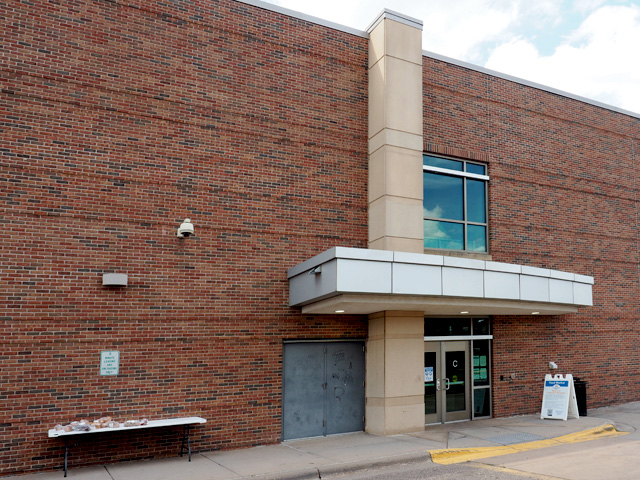
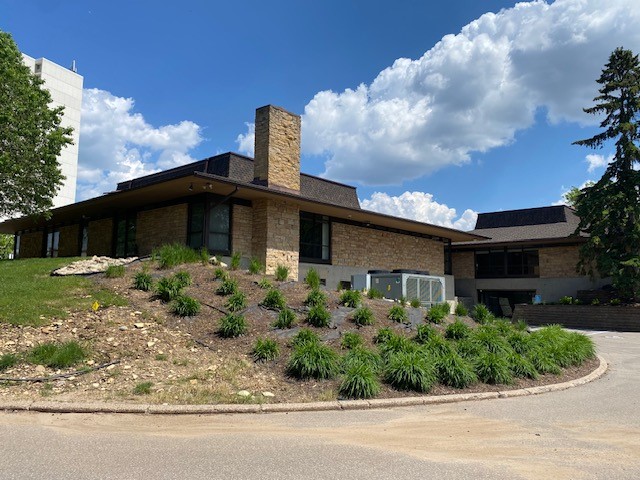
Volunteer Jim Ginther unloaded boxes of food from his Jeep last week at Neighborhood House’s newly opened food shelf in the lower level of CommonBond Communities’ corporate office at 1080 Montreal Ave.
“This space is great,” said Ginther, who has volunteered at Neighborhood House for six years. “We have a lot more refrigerator and freezer space, and shelving for food. It’s a lot easier to get in and out of here, too.”
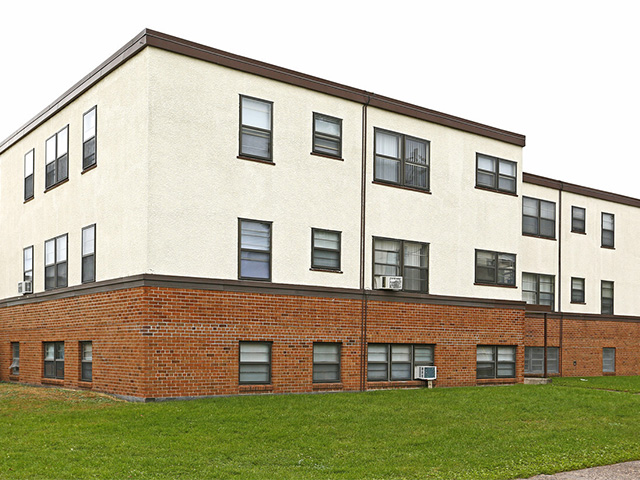
Neighborhood House closed its Francis Basket food shelf at the Sibley Manor Apartments in Highland Park at the end of May and moved to a much larger location on Montreal and the new Lexington Parkway South (former Elway Street) in the West Seventh neighborhood. The new food center opened on June 3 and currently is available from 9-11:30 a.m. and 1-4 p.m. Monday through Wednesday.
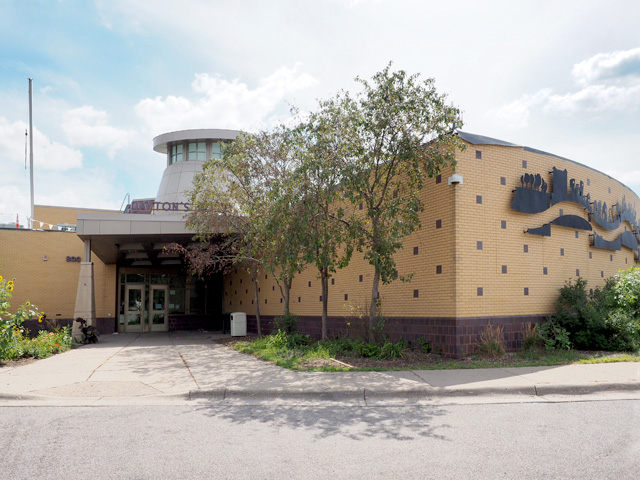
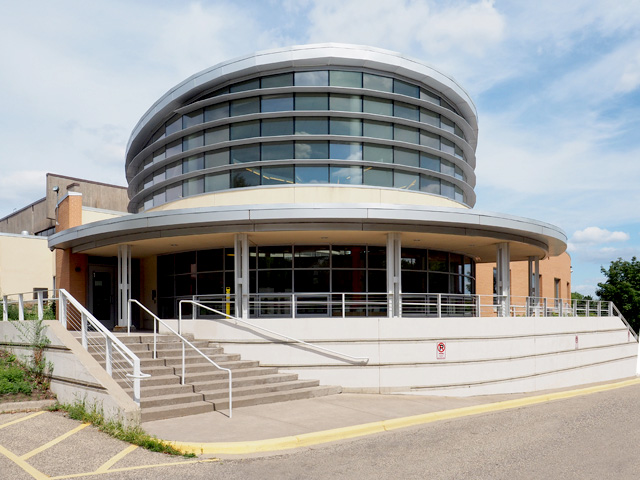
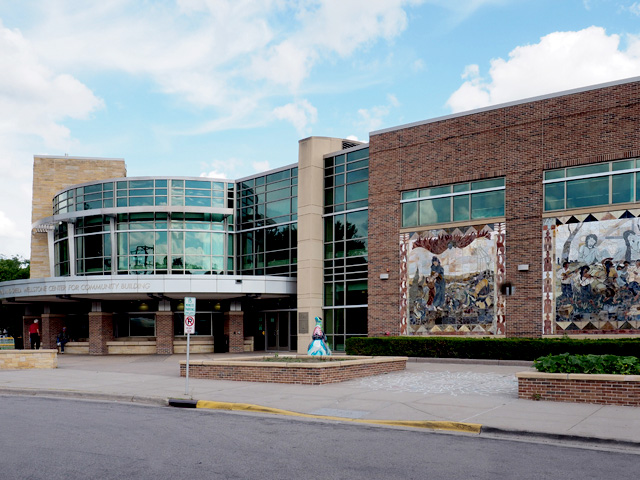
The building collects two prominent nonprofits in one place. CommonBond develops and manages affordable housing in Minnesota, Wisconsin, Iowa and South Dakota. Neighborhood House offers programs serving refugees, immigrants and residents needing housing stability, adult education, parent and early learning childhood education, youth literacy and Latino leadership. It also hosts a food shelf five days a week at its headquarters in the Wellstone Center, 179 E. Robie St.
Neighborhood House had been searching for a new location off of West Seventh Street for some time. Director of food support programs Cassie Kienbaum said the new, cost-free food center served 105 households in its first week, compared to 150 clients a month at Sibley Manor.
The new facility has distributed around 1,000 pounds of food a day and 4,500 pounds for the first week, Kienbaum said. That compares to 7,000 pounds of food a month at Sibley Manor. New clients from the adjacent Montreal Hi-Rise, a 185-unit public housing development operated by the city, are boosting the numbers.
“They weren’t visiting us before, so I wonder where they got the food they needed?” Kienbaum asked. “Or were they just doing the best they could? I’m not sure, but the need here is great.”
Sibley Manor residents are finding rides to the new Neighborhood House on Montreal, as it is called, or taking the Metro Transit 54 bus. The nonprofit held two open houses and shuttled residents to the new center, Kienbaum said.
“For some people who live in Sibley Manor, there may be a few challenges to getting here,” she said.
Neighborhood House plans to advertise the new food center to residents beyond Sibley Manor and the immediate area. The center does not serve a specific area, Kienbaum said, so clients can come from other neighborhoods as well.
Montreal market is much larger
Helping increase user numbers is the fact that the new food center is roughly three times larger than the old one. The former pantry had just one home-sized refrigerator and a chest freezer, Kienbaum said. The new one has two commercial refrigerators next to two commercial freezers.
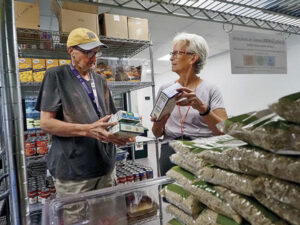
“This allows us to have more in stock of milk, eggs or meat,” Kienbaum said. “At the other site, we would run out of those things quickly because we had little room to store them.”
Neighborhood House also made a change to the way clients receive groceries. The Sibley Manor pantry was so small that clients would fill out a checklist of goods available and staff would pack bags based on what the food pantry had in stock.
“People weren’t shopping for themselves at the other site, but now they are,” Kienbaum said.
Neighborhood House on Montreal has two offices for its Food Support Program and also provides space for its Family Center, which will begin offering adult education classes this fall and eventually include a preschool and early childhood program. The Sibley Manor food shelf operated out of an apartment and had no private offices.
The food support staff uses the offices to meet with new clients after they fill out a form required by Neighborhood House. The offices provide a private space for staff to check with food center visitors to recommend other services if they need them.
Food partnerships are in stock
Neighborhood House uses partnerships established by Second Harvest Heartland to have volunteers pick up groceries from Lunds & Byerlys stores in Highland Bridge and downtown Saint Paul. Volunteers pick up boxes of dry goods, deli, dairy, fresh produce and fruit.
“We have a great partnership with those two locations,” Kienbaum said.
The food center also buys groceries from Second Harvest and The Food Group, and receives donations of groceries and produce from local organizations. House of Hope Church grows produce for Neighborhood House in a community garden. Beebe Community Garden in Mendota Heights donated 5,000 pounds last year. A couple grows the produce on their property and volunteers help with the harvest.
Kienbaum said Neighborhood House has a fundraising campaign that could help the new food center stay open five days a week. She
“I live right across the street,” said Bruce Kallenbach about the new center on Montreal. “It’s handy for me and a lot of people in the complex come by and get a bag of food for themselves. My neighbors are discovering it.”
wants to maintain the legacy that started decades ago with nuns who began the Francis Basket food shelf at Sibley Manor that Neighborhood House later took over and managed.
It is a legacy that has found new clients in a new location, such as Bruce Kallenbach, a retired trucker who lives in the Montreal Hi-Rise. He once took the bus to get provisions at Sibley Manor.
“I live right across the street,” he said about the new center. “It’s handy for me and a lot of people in the complex come by and get a bag of food for themselves. My neighbors are discovering it.