Students experiencing poverty are already behind. The pandemic is making it worse.

After the COVID-19 outbreak when schools closed, the transition online was difficult for teachers and students alike. But children from families experiencing poverty have faced additional challenges with technology and internet access, making virtual learning harder. Children living in poverty already experience educational inequality, which negatively impacts their development and education and leads to an achievement gap across socioeconomic status and race and ethnicity. With the addition of the pandemic, experts fear that students will fall further behind and the education gap across the country will grow.

Virtual learning is not equitable

Because families experiencing poverty don’t have disposable income, many don’t own computers, tablets, or pay for broadband internet access. Instead they rely on smartphones and mobile data for their technology needs. But activities like schoolwork can be difficult to accomplish on such a small screen, and because mobile data typically slows past a point of usage, it becomes harder to do things like stream videos, video chat, and make downloads.

Youth literacy instructor Sara Jochems explains, “Virtual learning is not equitable for many of the families we serve. Although St. Paul Public Schools allowed youth to keep their school tablets for the duration of the school year and during the summer months, that does not guarantee they have high-speed internet, if any internet at all.” She continues, “If students cannot access their school’s education platforms online, how are they supposed to accomplish schoolwork or seek help from their classroom or support teachers?”

Schools later delivered hotspots to those without internet access. Unfortunately, these hotspots were not always powerful enough for digital learning, especially when multiple students in a home were trying to go online at the same time.

“We know that some of our families have limited access to phones, tablets, computers, and Wi-Fi, making it more difficult for the children in their home to engage in online learning,” says Parent and Early Childhood Education (PECE) manager Amanda Williams. PECE works with preschool students not yet in the public school system, and because of this, they weren’t able to benefit from school tablet and hotspot rentals. “The pandemic has made disparities in access to technology even more evident,” she says.

The education gap is big—and it could get bigger

Minnesota has one of the worst education achievement gaps, with disparities across both socioeconomic status and race and ethnicity. Only 37% of students from families earning low incomes are proficient in math and reading compared to 68% of their higher-income peers. And only 30% of Black students are at grade level compared to 65% of White students. Furthermore, Minnesota has racial and ethnic disparities in poverty, meaning that Black, Indigenous, and people of color experience poverty at greater numbers than White people, with nearly 30% of Black and Indigenous people living in poverty compared to just over 7% of White people.

These disparities can be traced to a number of policy and structural issues related to housing and education. Because schools are funded most by property taxes, schools in low-income neighborhoods receive less money than those in high-income neighborhoods. And the damaging history of redlining, racial covenants, and other forms of housing discrimination caused clear housing segregation in the Twin Cities, forcing BIPOC families into low-income neighborhoods. Children then attend poorly funded schools with fewer resources and less-qualified teachers, resulting in a lower-quality education and creating a harmful achievement gap.

Experts fear that the disruption to learning and the lack of access to online tools during the pandemic will increase education disparities among children. Neighborhood House made it a priority back in March and continues to prioritize providing home-based education opportunities to our participants. Through quick action, strategic partnerships, and the continued adaptations of our online offerings, Neighborhood House is working to meet the needs of the community and get students back on track.

Making virtual education more equitable

The first step to making sure all our students could continue their educations during the pandemic was to ensure access to technology. So with the help of Comcast, we made sure our participants could access free or low-cost high-speed internet. The Rotary International Foundation and the St. Paul Rotary Foundation provided us with a tablet lending library so that students can log onto class, complete assignments, and connect with teachers. Anyone who needs a tablet can borrow one, whether they’re a parent in our PECE program, an adult learner in our adult education program, or a student in our literacy program.

The second step was to take our in-person programming online. Preschool teachers have been working closely with our youngest students to get them ready for kindergarten through weekly activity kits, teacher videos, and online lessons. Virtual summer camp is keeping our older kids engaged and curious through online learning platforms and weekly themed kits that promote literacy, STEM, and the arts. And our literacy program is helping children improve their English reading and writing abilities through one-on-one digital tutoring. Each week this summer, we’re delivering weekly activity kits to all of our students with educational games and activities. These, along with digital learning opportunities, are designed to get our students back on track. And even though we can’t be together in person, teachers will be engaging with students face-to-face through video calls, giving them the ability to talk through any questions or concerns they may have with their activities.

Students need your help

In order to provide an equitable education to our students, we need your help. There are new costs and materials associated with online learning that we weren’t able to plan for this year. And with the addition of the pandemic, our students are facing a greater possibility of falling behind. You can provide the educational activities and materials they need to get back on track. For only $20, you can provide two books for a student working on improving their English reading skills. And just $50 provides activity kits for five preschool students so they can practice concentration and develop their fine motor skills. And for $120, you can cover the cost of one week of activities for all 50 summer camp students. You can give children a summer full of learning. Will you give a gift today?
Please fill out and submit the form below to contact us.

Carrie Sowada | Child Development Specialist

Carrie comes to Neighborhood House as a recent graduate of the U of M’s Family Social Science program, where they graduated with distinction. They have more than five years of experience working with and mentoring children in St. Cloud area youth programs, as well as customer service and restaurant experience. Additionally, Carrie has experience in community building, advocacy, and working with children diagnosed with autism spectrum disorder. In their spare time, Carrie enjoys crocheting. It’s their favorite hobby. 

Valerie Dorschner | Early Childhood Instructor

Valerie has worked at Neighborhood House since 2004.

Valerie leads the Skills for School preschool program and is responsible for the curriculum. She has over 20 years of experience in early childhood working with parents and children, and has training and experience working with neurodiverse and dual language students.

  • Valerie is a licensed teacher with a bachelor’s degree in Education from the University of St. Thomas.
  • She holds licenses in elementary education and in early childhood education, and has several years of experience
    teaching elementary school.

Valerie enjoys her free time with her five children and one grandchild.

Victoria Campoverde

Victoria Campoverde is the program manager of Neighborhood House’s Latino Leadership Program. She is originally from Peru and was a licensed high school teacher in her home country.

Her extensive experience within the education sector exemplifies her commitment to education and families.

  • Currently, she serves as the Cultural Liaison between Columbia Heights School District and Anoka-Hennepin School District.
  • In 2008 Victoria began working with The Amherst H. Wilder Foundation’s Latino Leadership Program on adapting their curriculum for the Latinx community. Since then, she has continued working in the Latino Leadership Program after its 2020 transition to Neighborhood House.
  • Coauthor of Education: Our Best Legacy (EOBL), a school success program designed for parents or caregivers with one or more children in middle school. EOBL is part of the Partnering for School Success project (PSS) with the University of Minnesota’s Extension program.
  • Lead teacher and Program Director at Joyce Preschool.
  • A 25 on the Rise, Latino Leader recipient from the Hispanic Chamber of Commerce in 2006.
  • Facilitator with different Latino parent programs in the Twin Cities.
  • President of Kuyayki Peru MN Cultural Association.

For Victoria it is important to value ones culture and cultivate ones heritage. She believes in the importance of empowering the community through her work with Neighborhood House and the Latino Leadership Program. During her free time Victoria enjoys dancing.

Winter / Spring Fresh Produce Distributions Events*

From November–May, all are welcome to come pick up a variety of free fruits and vegetables for family and friends. Distributions take place at Metro State University in St. Paul.

This event is held indoors. Masks are encouraged but not required.

During each event, we distribute approximately 3,000 pounds of food to approximately 75-100 families on average.

No documentation or identification is required to participate.

For additional questions about the Food Markets, please visit our Frequently Asked Questions page.

Event guideline and details: Our fresh produce events are open to everyone!

  • Requirements: Nothing! You do not need identification to receive food.
  • Recommendations: You may want to bring your own bags and a cart if you have one. On average, visitors will leave with approximately 40 pounds of fresh produce per event. 
  • Registration: First-time visitors are required to register on site. The registration process will take 5-10 minutes to complete.
  • Parking: You can park in the Metro State ramp parking for $5. Otherwise, street parking is available along 7th St. and Bates Avenue.

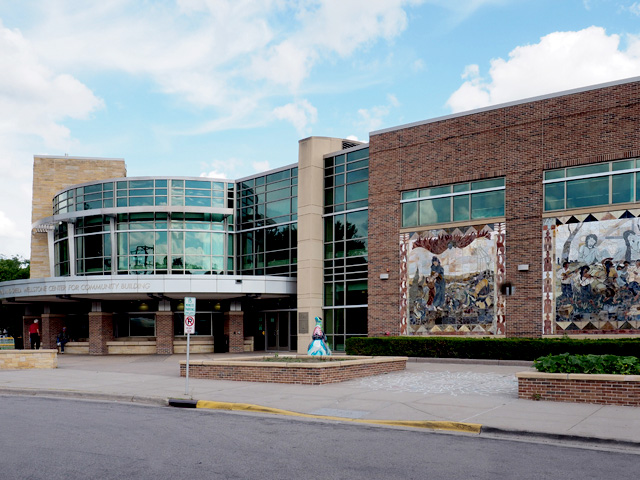
Wellstone Center | 179 Robie Street East, St. Paul, MN  55107


Location

Metropolitan State University

(Student Center Room)
101 690 E 7th St
St. Paul, MN 55106

TIME – 2:30–4 P.M.

DATES – December 17, 2025 | January 14, 2026 | February 11, 2026 | March 11, 2026 | April 8, 2026 | May 13, 2026


* Weather permitting – If there are thunderstorms or excessive heat warnings, we may cancel the event and / or events. For more information and event cancellation updates, please call (651) 789-3630.

Still have questions? Kindly email Nicki Thao, Food Market Site Coordinator.

Summer / Fall distributions* (Summer 2025)

From July to October, all are welcome to come pick up a variety of free fruits and vegetables for family and friends at our St. Paul locations. 

The distributions are held outdoors and are farmer’s market style. No documentation or identification is required to participate.

For additional questions about Food Support, please visit our Frequently Asked Questions page.

Event guideline and details: Our fresh produce events are open to everyone!

  • Requirements: Nothing! You do not need identification to receive food.
  • Recommendations: You may want to bring your own bags and a cart if you have one. On average, visitors will leave with approximately 40 pounds of fresh produce per event. 
  • Registration: First-time visitors are required to register on site. The registration process will take 5-10 minutes to complete.
  • Parking: You may park on the street at most of our locations. 
 

Locations

The Wellstone Center*

179 Robie Street
St. Paul, MN 55107

Dates

Every 2nd and 4th Wednesday from July to October
Hours: 12 p.m.–2 p.m.

  • 7/10
  • 7/24
  • 8/14
  • 8/28
  • 9/11
  • 9/25
  • 10/9
  • 10/23

Summit Brewing Parking Lot

902 Montreal Circle
St. Paul, MN 55102

Dates

Every 1st and 3rd Thursday from July to October
Hours: 12 p.m.–2 p.m.

  • 7/3
  • 7/17
  • 8/7
  • 8/21
  • 9/4
  • 9/18
  • 10/2
  • 10/16

* Weather permitting. If there are thunderstorms or excessive heat warnings, we may cancel the event and / or events. For more information and event cancellation updates, please call (651) 789-3630.

Still have questions? Please email Nikki Thao, Food Market Coordinator.

Food Market Location

Francis Basket

1293 East Maynard Drive #410
St Paul, MN 55116
Phone: (651) 699-0986

Building Hours

Monday

9AM – 11:30AM

Tuesday & WEDNESDAYS

9AM – 11:30AM
1PM – 4PM

Highland / Sibley Manor

Food Market Location

The Wellstone Center

179 Robie Street
St. Paul, MN 55107
Phone: (651) 789-2500
Food Market Info: (651) 789-3630

Appointment Required

Make Appointment online: Click Here

Appointment Scheduling Hours

Monday – Friday

9:30AM–4PM

Operating Hours

Monday

TUESDAYFRIDAY

SATURDAY

  • 1–4PM 
  • 9:30–11:30AM
  • 1–3:30PM

Closed Saturdays until 2026

Wellstone Center Food Market

St. Paul Music Academy

27 Geranium Avenue East
St Paul, MN 55117
Service Connect: (651) 789-3602

Building Hours

Monday – Friday

9AM – 4PM

St. Paul Music Academy

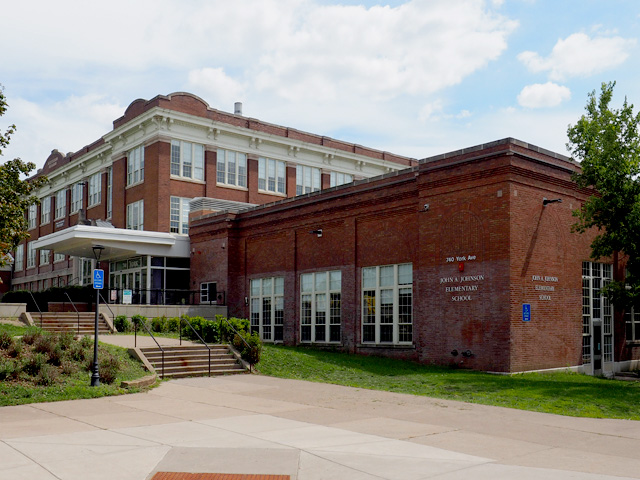
John A. Johnson Elementary

740 York Avenue
St Paul, MN 55106
Service Connect: (651) 789-3602

Building Hours

Monday – Friday

9AM – 4PM

John A. Johnson Elementary

Neighborhood House on Montreal

1080 Montreal Ave
St Paul, MN 55116
Service Connect: (651) 789-3602

Building Hours

Monday – Friday

9AM – 4PM

No appointment necessary

Operating Hours​

MONDAYWEDNESDAY

  • 9:30–11:30AM
  • 1–4PM
Neighborhood House on Montreal

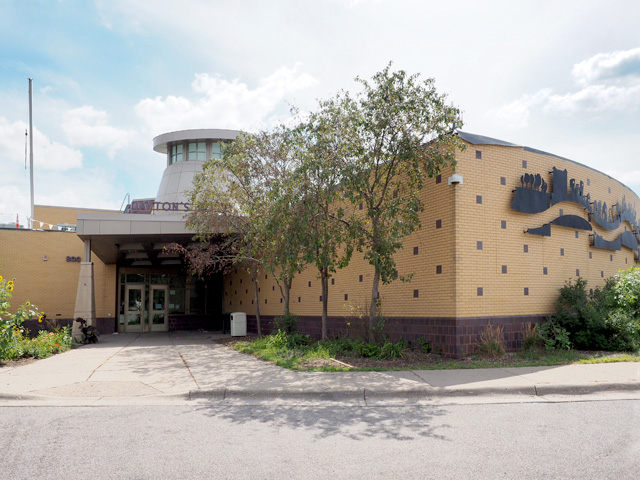
Dayton's Bluff Elementary

262 Bates Avenue
St. Paul, MN 55106
Service Connect: (651) 789-3602

Building Hours

Monday – Friday

9AM – 4PM

Dayton's Bluff Elementary

Bruce Vento Elementary

409 Case Avenue East
St Paul, MN 55130
Service Connect: (651) 789-3602

Building Hours

Monday – Friday

9AM – 4PM

Bruce Vento Elementary

Main Campus

The Wellstone Center

179 Robie Street
St. Paul, MN 55107
Main Phone: (651) 789-2500
Service Connect: (651) 789-3602
Food Market Info: (651) 789-3630

Building Hours

Monday – Friday

8AM – 9PM

Saturday

8AM – 4PM

Sunday

NOON – 5PM

The Wellstone Center

Parking

The Wellstone Center Parking Ramp is located on the west side of the main building. The ramp has three levels with one elevator bank. Take the elevator to the first floor and follow the signs towards the information desk.
Parking is free.

Note: Building hours may be adjusted due to holidays, emergencies, program changes or weather. Check our website homepage and social media for possible building hour changes.