The harmful impacts of implicit bias and systemic racism

Time and again, powerful and brilliant men and women have produced racist ideas in order to justify the racist policies of their era, in order to redirect the blame for their era’s racial disparities away from those policies and onto Black people.
— Ibram X. Kendi

The racial disparities in our country are the direct result of hundreds of years of systemic racism and policy. Systemic racism, along with implicit bias, creates a cycle that propels White people to success and keeps Black people behind. While conversations around inequities have reignited in the wake of the George Floyd murder, it is the responsibility of White people to learn how this cycle benefits them and hurts others—and most importantly, to push for systemic change.  

Those with privilege must understand their place in this cycle. For those who have been demanding change for decades, we ask that those with privilege take the time to reflect on their lives. How can you use your power to create a more equitable world?

Right here in Minnesota, we are reflective of years of systemic racism that has led to some of the country’s largest racial disparities. We are better than that. We must come together as a community and work toward a better state for all. But before we can get to work in our own lives and demand change, we must understand the systems in place.

What is implicit bias?

Implicit bias is how people unconsciously assign stereotypes toward others. This includes the harmful stereotypes that White people learn to assign to the BIPOC community.

Implicit bias is active when people interact with peers at work, when they pass shoppers in the grocery store, and when they see groups of people on the street. Even when people do their best to treat others with respect and compassion, they may unknowingly react with implicit bias. This can be harmful to those around them.

Because implicit bias is a process of thinking, it is more difficult to call out and address than overt racism. 

Test your implicit bias here. There are a number of biases you can test, including disability, sexuality, weight, age, and more. Navigate to the race test by clicking “go” under project implicit social attitudes. Select “I wish to proceed” and then select the “Race IAT” button toward the middle. 

What is systemic racism?

Systemic racism (also known as structural racism or institutional racism) refers to systems and policies that harm the health and livelihood of BIPOC. These systems include housing, food access, education, incarceration, workplaces, and more.

Systemic racism was designed to propel White people to succeed and make it harder for BIPOC to succeed. These systems continue to exist today due to the implicit bias of those who work in and benefit from these systems.

How do implicit bias and systemic racism work together?

Because implicit bias feeds into systems like incarceration, housing, and healthcare, these systems continue to flourish while racial disparities grow. And as racial disparities grow, so does implicit bias and stereotypes against BIPOC, creating a harmful cycle.

For example, when using a similar resume, job-seekers with Black-sounding names received 50 percent fewer callbacks than job-seekers with White-sounding names. Here we can see that implicit bias clearly impacts the hiring process. When Black people are given fewer opportunities, it makes it that much harder for them to succeed. 

Healthcare workers have implicit biases like everyone else, and this can be seen in the type of care patients receive. The National Academy of Medicine found that “racial and ethnic minorities receive lower-quality health care than White people—even when insurance status, income, age, and severity of conditions are comparable.” This systemic racism is life-threatening, as more people die from cancer, heart disease, and diabetes in the United States solely because of their race or ethnicity—not because they lack access to healthcare. 

Generations of housing policies like redlining and racial covenants in the Twin Cities forced BIPOC families into less desirable neighborhoods and banned them from more desirable neighborhoods designated for White families. The thinking behind this was racist, based on the idea that neighborhoods would be stronger if they were segregated, and that White families deserved to live in better neighborhoods. To this day we see the same segregation with BIPOC families in low-income areas and White families in high-income areas. And because lower-income neighborhoods are higher in crime, have less availability of fresh foods, and poorer-quality education for children, housing impacts numerous aspects related to one’s health and livelihood.

What we see across the nation and in the Twin Cities is the same. Due to implicit bias and systemic racism, Black and Brown people must work harder for the same opportunities afforded to White people. 

Our biases and the systems around us create a world where a barrier to success is the color of one’s skin. And although that idea is shameful to most of us, we play a part in the continuation of this reality. We may be quick to call out overt racism, but it’s implicit or indirect racism that we often fail to call out, and sometimes even notice. It is implicit bias that allows these systems to continue without any meaningful change. And this kind of racism has arguably greater impacts on the BIPOC community than overt racism.

What’s the solution?

There is no small or simple answer to fixing hundreds of years of oppression and discrimination. Racial disparities in the United States must be addressed through policy reform, which should be well-researched and involve community input. 

But before meaningful policy changes will ever pass, more people—specifically White people—need to be aware of the implicit biases they hold and the role they play in systemic racism. It’s not enough to be “not racist.” We must be antiracist and that means understanding how you benefit from racist systems and contribute to them. And it means fighting against policies that create racial disparities. 

Don’t let the momentum fade 

As these next months come and go, we ask that you work to keep this momentum going. Please do not forget the very real issues that are top-of-mind right now. Don’t let your friends and family forget. Continue to educate yourself and others and fight for reforms. We ask that you push back against the idea of “returning to normal,” because normal means systemic racism that disadvantages the BIPOC community and so many of our participants at Neighborhood House.  

Implicit bias and systemic racism will not fade away without active, daily work. It is up to each of us to do better, not just for others but for ourselves. When we keep equity and fairness at the root of our actions, we will make meaningful change and create a more equitable world.
Please fill out and submit the form below to contact us.

Carrie Sowada | Child Development Specialist

Carrie comes to Neighborhood House as a recent graduate of the U of M’s Family Social Science program, where they graduated with distinction. They have more than five years of experience working with and mentoring children in St. Cloud area youth programs, as well as customer service and restaurant experience. Additionally, Carrie has experience in community building, advocacy, and working with children diagnosed with autism spectrum disorder. In their spare time, Carrie enjoys crocheting. It’s their favorite hobby. 

Valerie Dorschner | Early Childhood Instructor

Valerie has worked at Neighborhood House since 2004.

Valerie leads the Skills for School preschool program and is responsible for the curriculum. She has over 20 years of experience in early childhood working with parents and children, and has training and experience working with neurodiverse and dual language students.

  • Valerie is a licensed teacher with a bachelor’s degree in Education from the University of St. Thomas.
  • She holds licenses in elementary education and in early childhood education, and has several years of experience
    teaching elementary school.

Valerie enjoys her free time with her five children and one grandchild.

Victoria Campoverde

Victoria Campoverde is the program manager of Neighborhood House’s Latino Leadership Program. She is originally from Peru and was a licensed high school teacher in her home country.

Her extensive experience within the education sector exemplifies her commitment to education and families.

  • Currently, she serves as the Cultural Liaison between Columbia Heights School District and Anoka-Hennepin School District.
  • In 2008 Victoria began working with The Amherst H. Wilder Foundation’s Latino Leadership Program on adapting their curriculum for the Latinx community. Since then, she has continued working in the Latino Leadership Program after its 2020 transition to Neighborhood House.
  • Coauthor of Education: Our Best Legacy (EOBL), a school success program designed for parents or caregivers with one or more children in middle school. EOBL is part of the Partnering for School Success project (PSS) with the University of Minnesota’s Extension program.
  • Lead teacher and Program Director at Joyce Preschool.
  • A 25 on the Rise, Latino Leader recipient from the Hispanic Chamber of Commerce in 2006.
  • Facilitator with different Latino parent programs in the Twin Cities.
  • President of Kuyayki Peru MN Cultural Association.

For Victoria it is important to value ones culture and cultivate ones heritage. She believes in the importance of empowering the community through her work with Neighborhood House and the Latino Leadership Program. During her free time Victoria enjoys dancing.

Winter / Spring Fresh Produce Distributions Events*

From November–May, all are welcome to come pick up a variety of free fruits and vegetables for family and friends. Distributions take place at Metro State University in St. Paul.

This event is held indoors. Masks are encouraged but not required.

During each event, we distribute approximately 3,000 pounds of food to approximately 75-100 families on average.

No documentation or identification is required to participate.

For additional questions about the Food Markets, please visit our Frequently Asked Questions page.

Event guideline and details: Our fresh produce events are open to everyone!

  • Requirements: Nothing! You do not need identification to receive food.
  • Recommendations: You may want to bring your own bags and a cart if you have one. On average, visitors will leave with approximately 40 pounds of fresh produce per event. 
  • Registration: First-time visitors are required to register on site. The registration process will take 5-10 minutes to complete.
  • Parking: You can park in the Metro State ramp parking for $5. Otherwise, street parking is available along 7th St. and Bates Avenue.

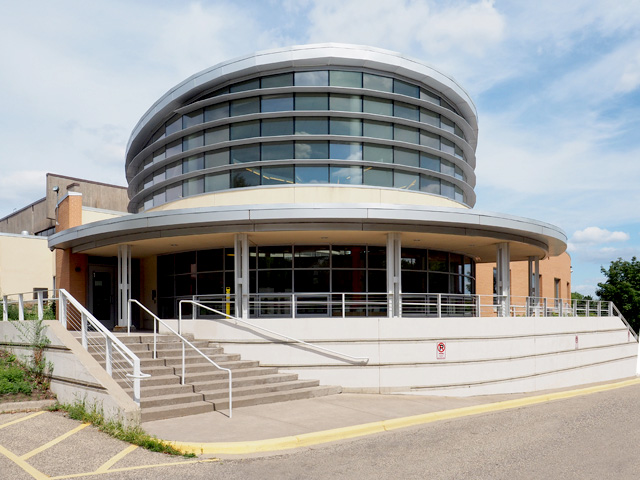
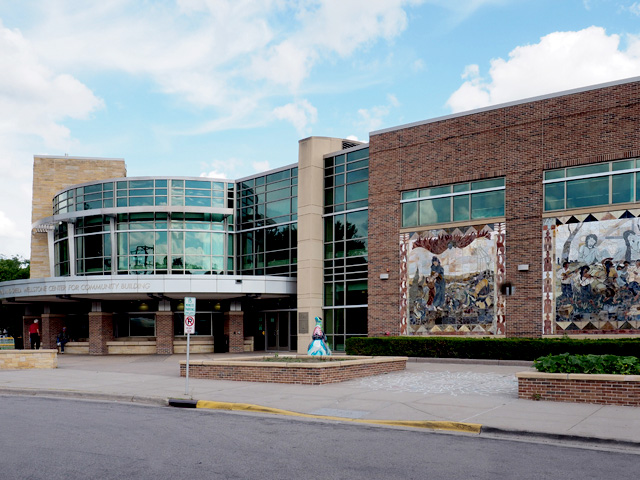
Wellstone Center | 179 Robie Street East, St. Paul, MN  55107


Location

Metropolitan State University

(Student Center Room)
101 690 E 7th St
St. Paul, MN 55106

TIME – 2:30–4 P.M.

DATES – December 17, 2025 | January 14, 2026 | February 11, 2026 | March 11, 2026 | April 8, 2026 | May 13, 2026


* Weather permitting – If there are thunderstorms or excessive heat warnings, we may cancel the event and / or events. For more information and event cancellation updates, please call (651) 789-3630.

Still have questions? Kindly email Nicki Thao, Food Market Site Coordinator.

Summer / Fall distributions* (Summer 2025)

From July to October, all are welcome to come pick up a variety of free fruits and vegetables for family and friends at our St. Paul locations. 

The distributions are held outdoors and are farmer’s market style. No documentation or identification is required to participate.

For additional questions about Food Support, please visit our Frequently Asked Questions page.

Event guideline and details: Our fresh produce events are open to everyone!

  • Requirements: Nothing! You do not need identification to receive food.
  • Recommendations: You may want to bring your own bags and a cart if you have one. On average, visitors will leave with approximately 40 pounds of fresh produce per event. 
  • Registration: First-time visitors are required to register on site. The registration process will take 5-10 minutes to complete.
  • Parking: You may park on the street at most of our locations. 
 

Locations

The Wellstone Center*

179 Robie Street
St. Paul, MN 55107

Dates

Every 2nd and 4th Wednesday from July to October
Hours: 12 p.m.–2 p.m.

  • 7/10
  • 7/24
  • 8/14
  • 8/28
  • 9/11
  • 9/25
  • 10/9
  • 10/23

Summit Brewing Parking Lot

902 Montreal Circle
St. Paul, MN 55102

Dates

Every 1st and 3rd Thursday from July to October
Hours: 12 p.m.–2 p.m.

  • 7/3
  • 7/17
  • 8/7
  • 8/21
  • 9/4
  • 9/18
  • 10/2
  • 10/16

* Weather permitting. If there are thunderstorms or excessive heat warnings, we may cancel the event and / or events. For more information and event cancellation updates, please call (651) 789-3630.

Still have questions? Please email Nikki Thao, Food Market Coordinator.

Food Market Location

Francis Basket

1293 East Maynard Drive #410
St Paul, MN 55116
Phone: (651) 699-0986

Building Hours

Monday

9AM – 11:30AM

Tuesday & WEDNESDAYS

9AM – 11:30AM
1PM – 4PM

Highland / Sibley Manor

Food Market Location

The Wellstone Center

179 Robie Street
St. Paul, MN 55107
Phone: (651) 789-2500
Food Market Info: (651) 789-3630

Appointment Required

Make Appointment online: Click Here

Appointment Scheduling Hours

Monday – Friday

9:30AM–4PM

Operating Hours

Monday

TUESDAYFRIDAY

SATURDAY

  • 1–4PM 
  • 9:30–11:30AM
  • 1–3:30PM

Closed Saturdays until 2026

Wellstone Center Food Market

St. Paul Music Academy

27 Geranium Avenue East
St Paul, MN 55117
Service Connect: (651) 789-3602

Building Hours

Monday – Friday

9AM – 4PM

St. Paul Music Academy

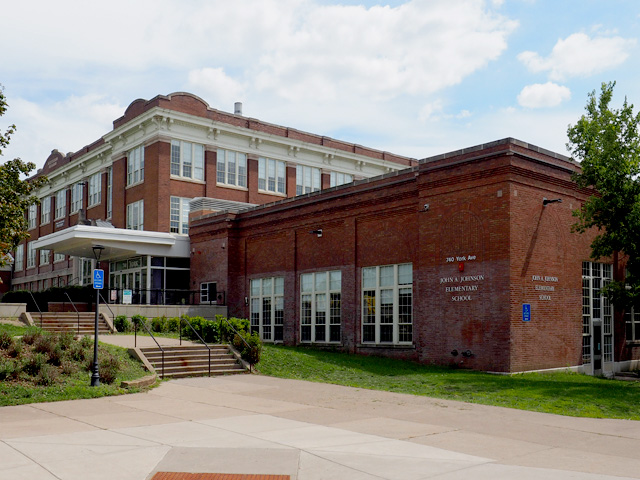
John A. Johnson Elementary

740 York Avenue
St Paul, MN 55106
Service Connect: (651) 789-3602

Building Hours

Monday – Friday

9AM – 4PM

John A. Johnson Elementary

Neighborhood House on Montreal

1080 Montreal Ave
St Paul, MN 55116
Service Connect: (651) 789-3602

Building Hours

Monday – Friday

9AM – 4PM

No appointment necessary

Operating Hours​

MONDAYWEDNESDAY

  • 9:30–11:30AM
  • 1–4PM
Neighborhood House on Montreal

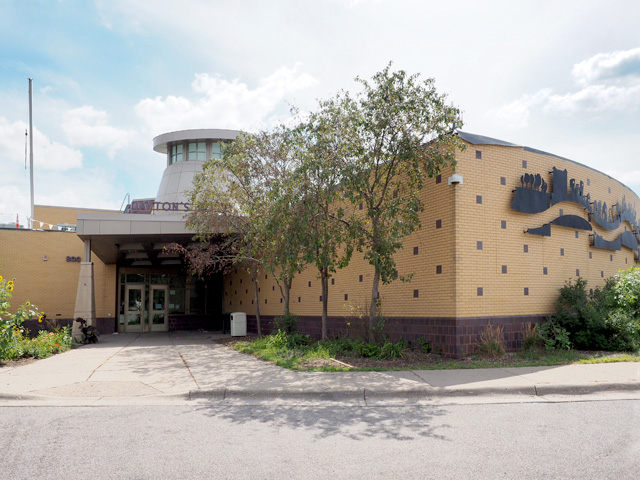
Dayton's Bluff Elementary

262 Bates Avenue
St. Paul, MN 55106
Service Connect: (651) 789-3602

Building Hours

Monday – Friday

9AM – 4PM

Dayton's Bluff Elementary

Bruce Vento Elementary

409 Case Avenue East
St Paul, MN 55130
Service Connect: (651) 789-3602

Building Hours

Monday – Friday

9AM – 4PM

Bruce Vento Elementary

Main Campus

The Wellstone Center

179 Robie Street
St. Paul, MN 55107
Main Phone: (651) 789-2500
Service Connect: (651) 789-3602
Food Market Info: (651) 789-3630

Building Hours

Monday – Friday

8AM – 9PM

Saturday

8AM – 4PM

Sunday

NOON – 5PM

The Wellstone Center

Parking

The Wellstone Center Parking Ramp is located on the west side of the main building. The ramp has three levels with one elevator bank. Take the elevator to the first floor and follow the signs towards the information desk.
Parking is free.

Note: Building hours may be adjusted due to holidays, emergencies, program changes or weather. Check our website homepage and social media for possible building hour changes.