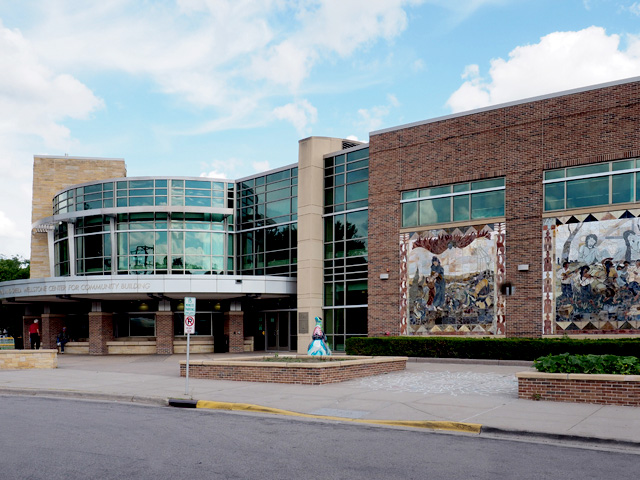
The History of Neighborhood House: A Story Told Through Art
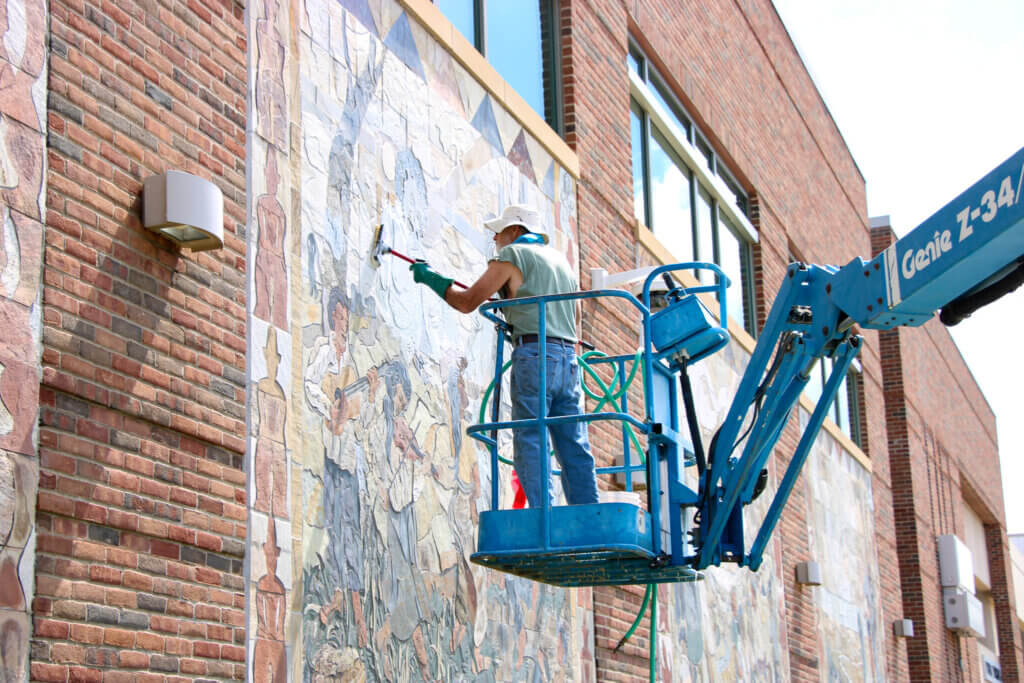
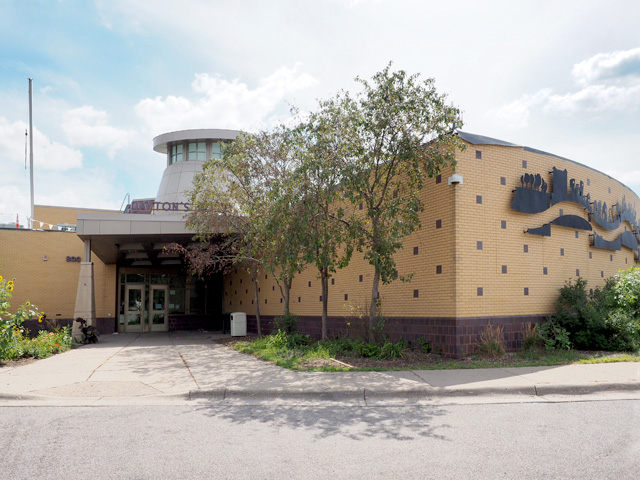
In 2007, Neighborhood House commissioned The History of Neighborhood House by artist Craig David, a series of four 15×15 large panels installed on the front of the Paul and Sheila Wellstone Center. The panels are created out of limestone, slate, quartzite, sandstone, and porcelain, which are cut and assembled like puzzle pieces in an ancient Roman mosaic style called opus sectile.
Rather than showing a timeline of factual events, the mural uses allegory, metaphor, and imagery to depict Neighborhood House’s history and tell the story of the many people who have come to Neighborhood House, their journeys, and connections.
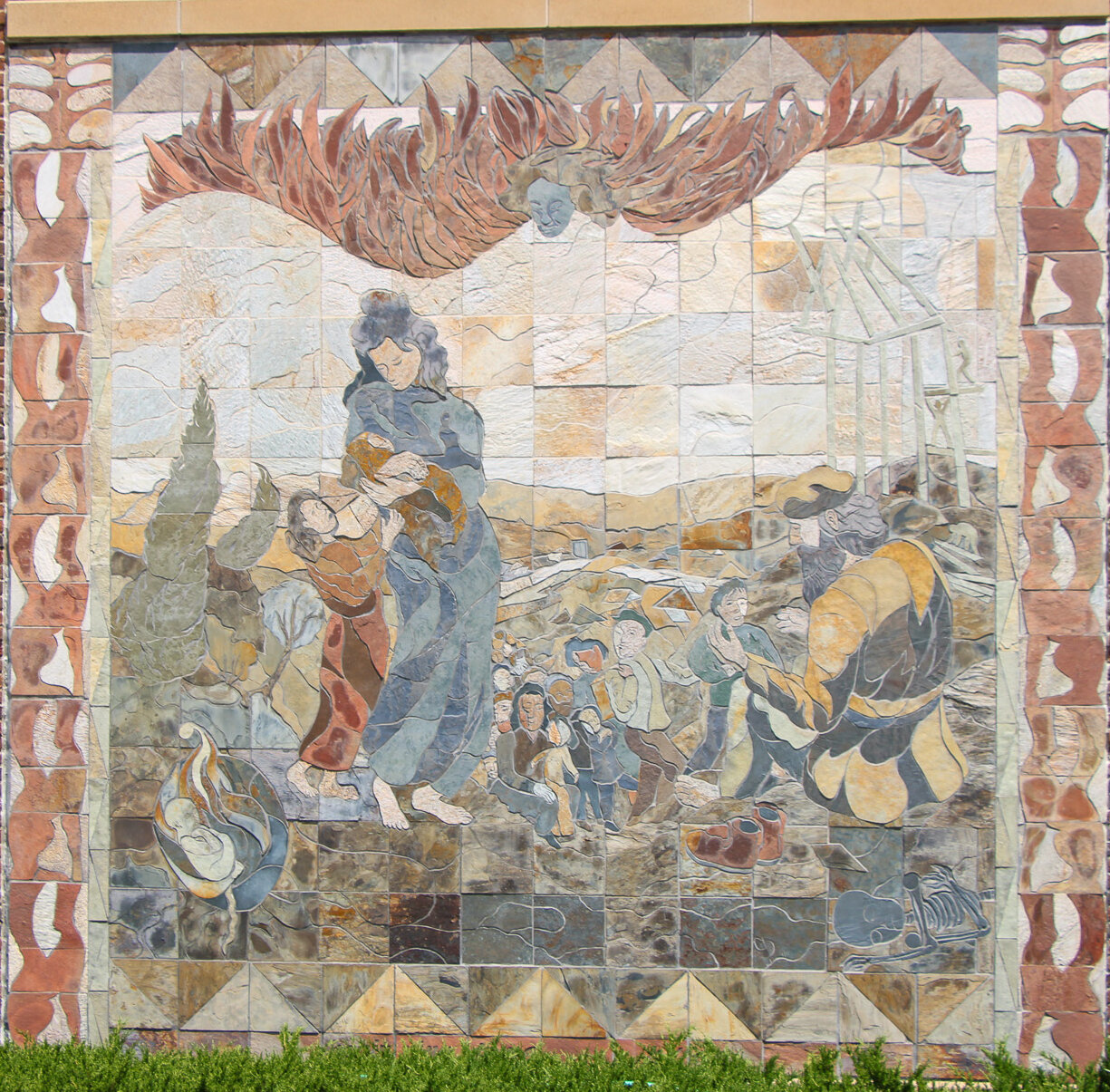
Panel One: Hxar – Beginning Time
The first panel focuses on the founding, framing, and building of Neighborhood House. Founded by the women of Mount Zion as a settlement house, the piece shows images of people crossing over water and being welcomed to a new place, recognizing the journeys many took to Saint Paul in search of new opportunities. The seed in the bottom left corner represents the birth of community and new life. Symbols such as a guardian angel and the Tree of Life reflect themes of protection, strength, and hope.
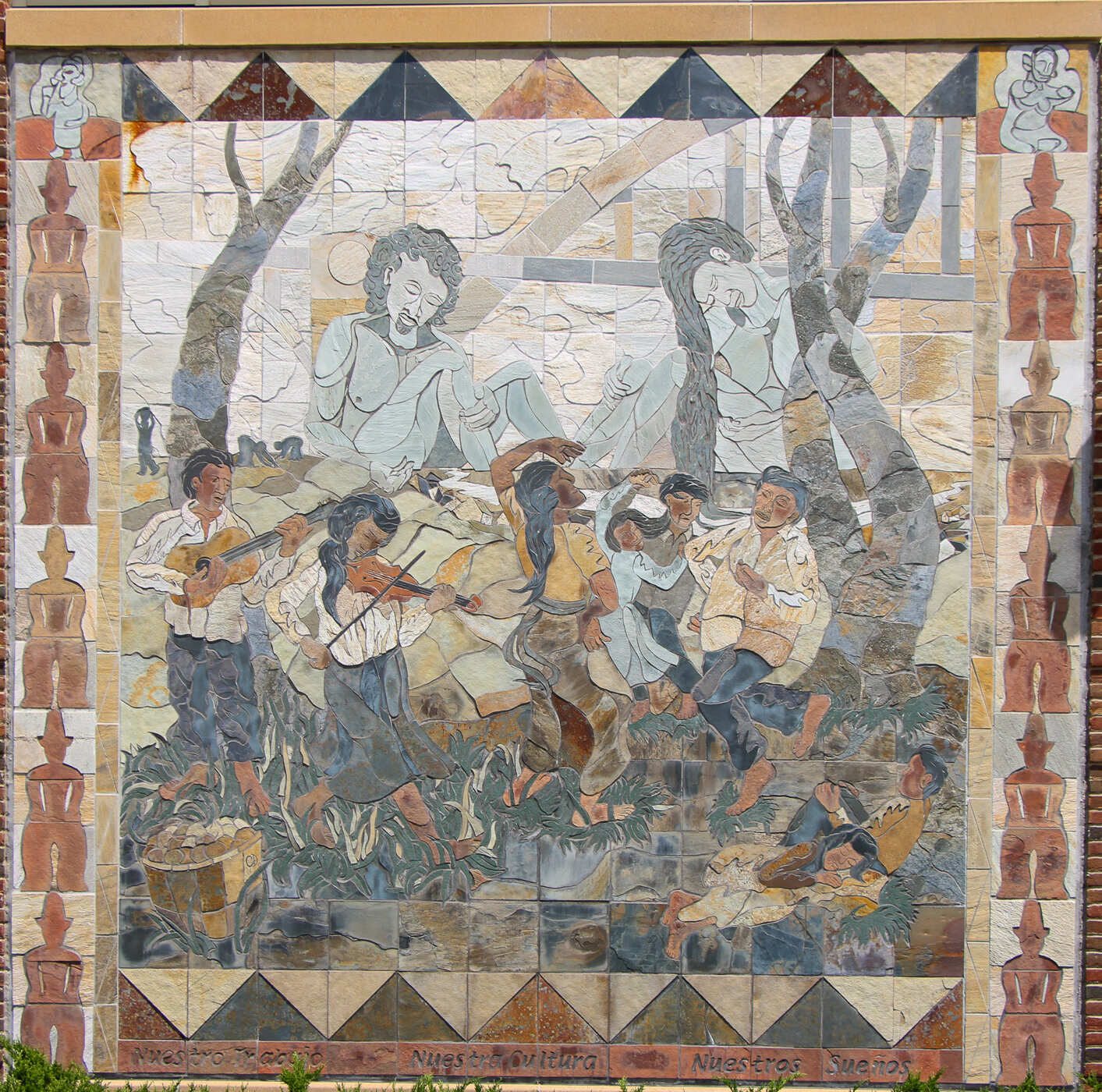
Panel Two: Sueño Trabajo, Sueña Cultura, Sueños – Our Work, Our Culture, Our Dreams
The second panel celebrates family and community and what it looks like to hold old culture in a new land. It features strong Hispanic influences and includes images of people dancing and playing music. The artwork also includes Mayan iconography to pay homage to the West Side’s Mexican roots.
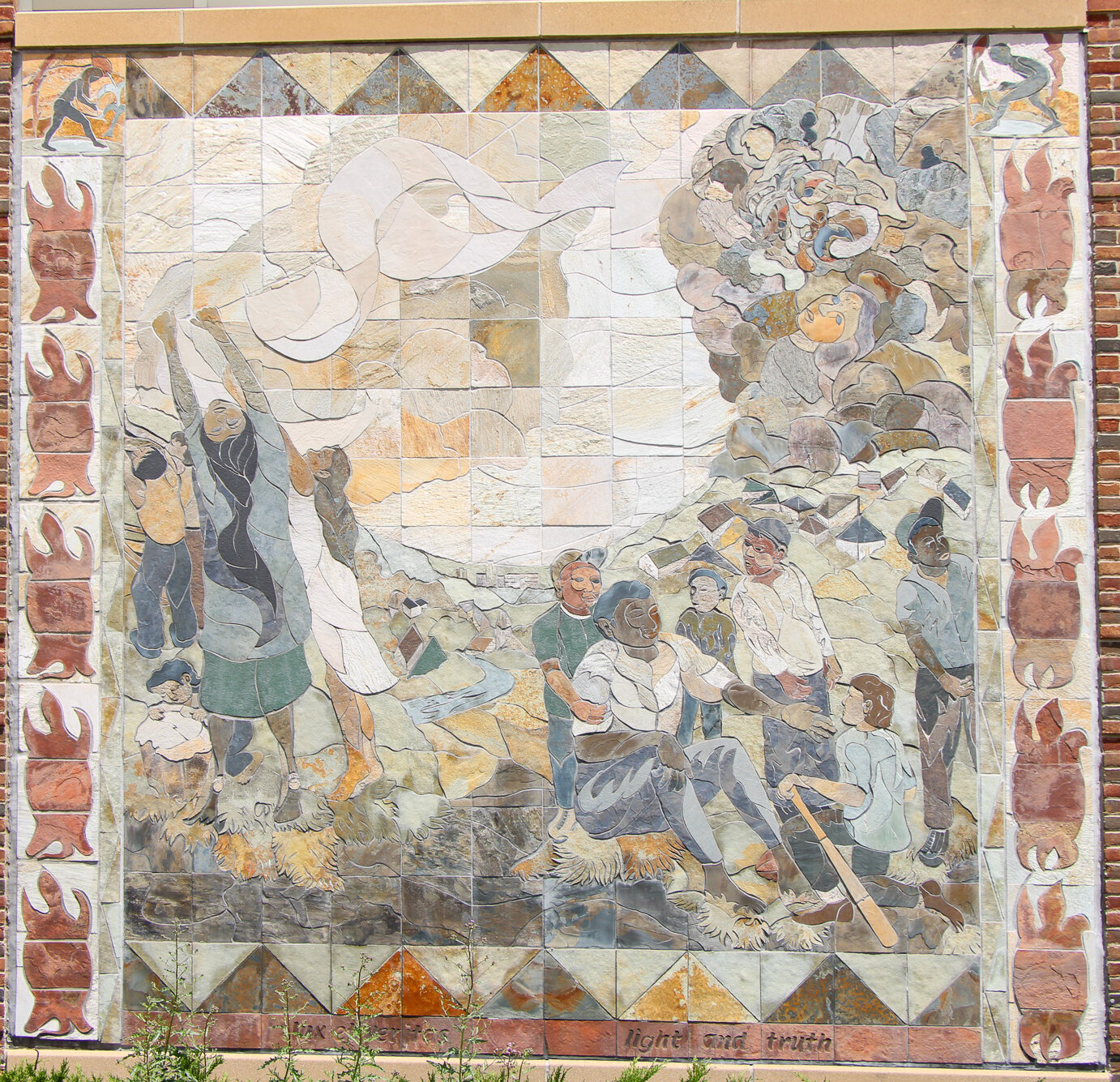
Panel Three: Lux Veritas – Light and Truth
The third panel represents the work done to create community and the support that it provides through symbols of coaching, mentorship, and images of familial love. In the bottom right corner, an older individual teaches youth, sharing wisdom and traditions across generations. The theme of wisdom is reinforced by the turtle that outlines the mural, serving as a symbol of knowledge, guidance, and enduring strength.
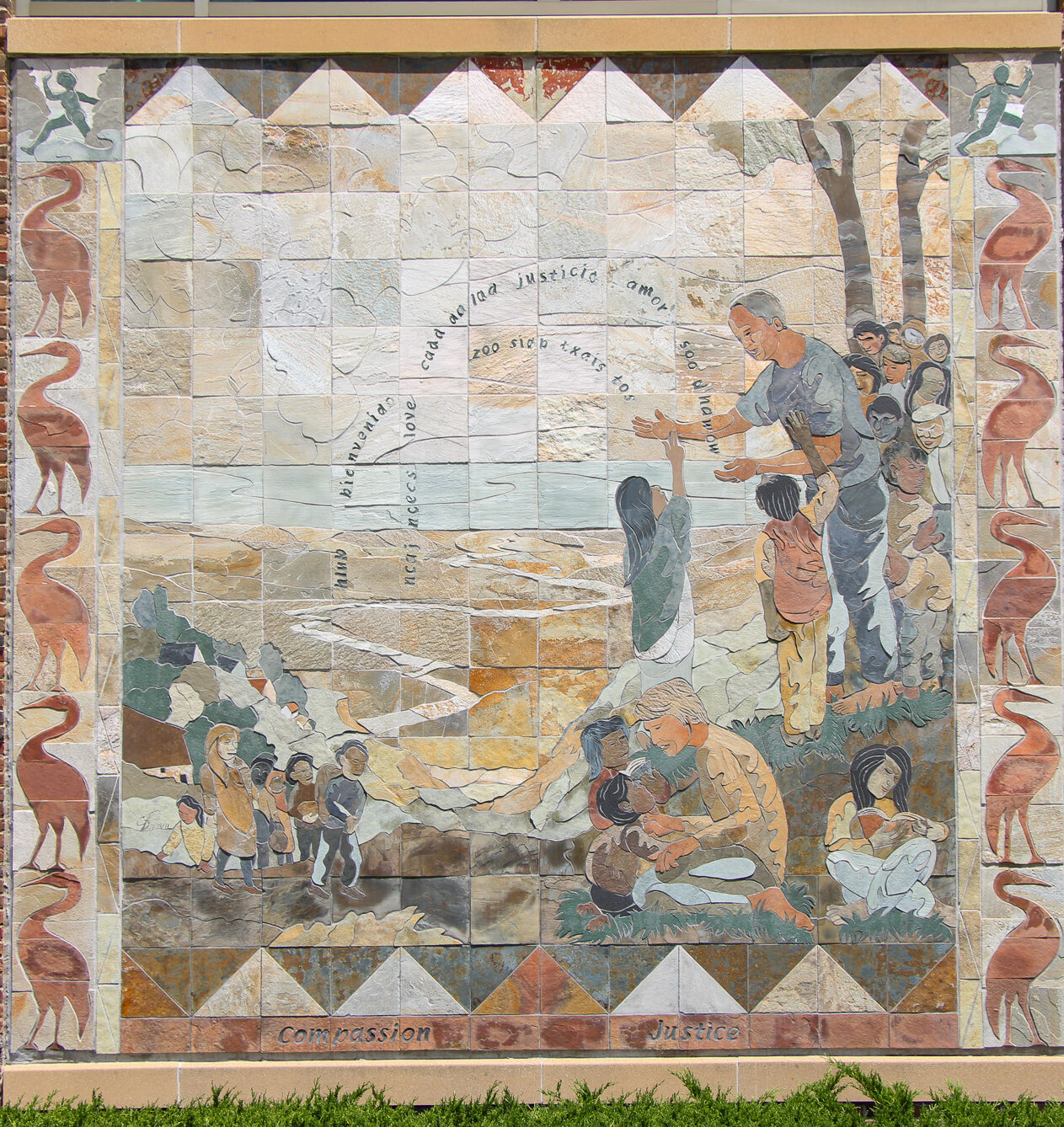
Panel Four: Compassion – Justice
The final panel looks to the future and the opportunities that lie ahead. It honors the contributions of Paul and Sheila Wellstone and celebrates the ongoing pursuit of knowledge, belonging, and opportunity.
The mural includes visuals of people uniting after a long journey to celebrate the beginning of a new day. The crane bordering the panel represents peace and helps frame a vision of people coming together through shared hopes and aspirations.
More than a decorative feature, The History of the Neighborhood House tells a story of resilience, welcome, and community. Through four connected panels, the murals honor the experiences of generations of immigrants, families, and neighbors who have shaped what Neighborhood House is today.
About the Artist:
Craig David has dedicated his career to working with community public works. He aims to create art that extends beyond pure aesthetics and to create pieces that are meaningful and collaborative and that resonate with communities. In The History of the Neighborhood House, David enlisted the help of local youth to help him place the last installations into the fourth panel of the mural.
David believes the making of art is a “genesis for change” and continues to use his art to amplify immigrant stories and the development of community today. Almost 20 years after he created the murals, their message remains relevant and vital. David says: “This is an immigrant country; to turn our backs on immigrants is a foolish thing in my mind.” David comes from a family of Irish and German immigrants who landed in the West Side neighborhood, and his wife’s family moved to Minnesota from Mexico. Influenced by his personal connections through his own ancestry and seeing his wife’s family’s experience firsthand, David says he “fell in love” with the immigrant story and the themes of cross-cultural connection and resilience.
David has created 14 public artworks throughout the Saint Paul area. Common themes throughout his work include bridges as symbols of connection, the celebration of culture through dance and music, and the importance of coming together as a community. His murals invite viewers to reflect on the people whose cultures, stories, and shared experiences have shaped the Saint Paul area into what it is today.
“I love my neighborhood. I love the fact that it’s a multicultural neighborhood. I want the story of it to be told, and I want the place to be beautified. And I want people to see what it is.” —Craig David
Sources:
Interview with Craig David, June 2026
Making District Del Sol – The Murals of Saint Paul’s West Side by Jenna F. Harris