
2026 Book Club Events
The NeighbReads Book Club is starting for 2026. We’ll dive into books featuring culturally relevant themes and stories from award-winning authors. Join us virtually to discuss, learn, and explore other perspectives as we unpack these incredible stories.
All are welcome to participate. Please register here to join the discussion. We encourage you to visit your local library or independent bookstore to borrow or purchase books.
January 13 | 7 – 8:30 p.m. Register Here
 Knife: Meditations After an Attempted Murder by Salman Rushdie
In this personal narrative, Salman Rushdie recounts the near-fatal attack he experienced during a lecture at the Chautauqua Institution. He shares his journey of recovery and healing in the after math of this traumatic event, using the experience as a lens to reflect on life, love, and resilience.
March 10 | 7–8:30 p.m. | Register Here

A Protest History of the United States by Gloria J. Browne-Marshall
Following 500 years of resistance movements, Professor Gloria J. Browne-Marshall traces the history of protests and rebellions across the United States. Highlighting stories from both well-known and overlooked movements, Browne-Marshall illustrates how these struggles have shaped the nation and its democracy.
May 5 | 7–8:30 p.m. | Register Here
Our Migrant Souls: A Meditation on Race and the Meanings and 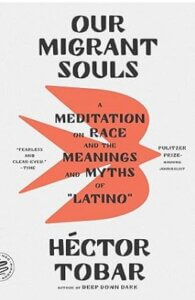 Myths of “Latino” by Héctor Tobar
In this powerful memoir, Héctor Tobar, a Pulitzer Prize-winning author, explores what it means to be Latino in the United States in today’s society. Drawing on his experiences as a Guatemalan who migrated to the U.S., Tobar lifts up Latino voices and communities across the country and challenges stereotypes surrounding Latino identity.
July 21 | 7–8:30 p.m. | Register Here
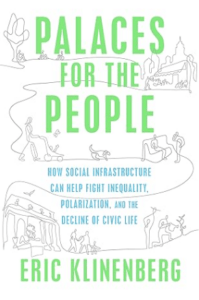
Palaces for the People: How Social Infrastructure Can Help Fight Inequality, Polarization, and the Decline of Civic Life by Eric Klinenberg
In Palaces for the People, Eric Klinenberg suggests a way forward. He believes that the future of democratic societies rests not simply on shared values but on shared spaces: the libraries, childcare centers, churches, and parks where crucial connections are formed. Interweaving his own research with examples from around the globe, Klinenberg shows how “social infrastructure” is helping to solve some of our most pressing societal challenges.